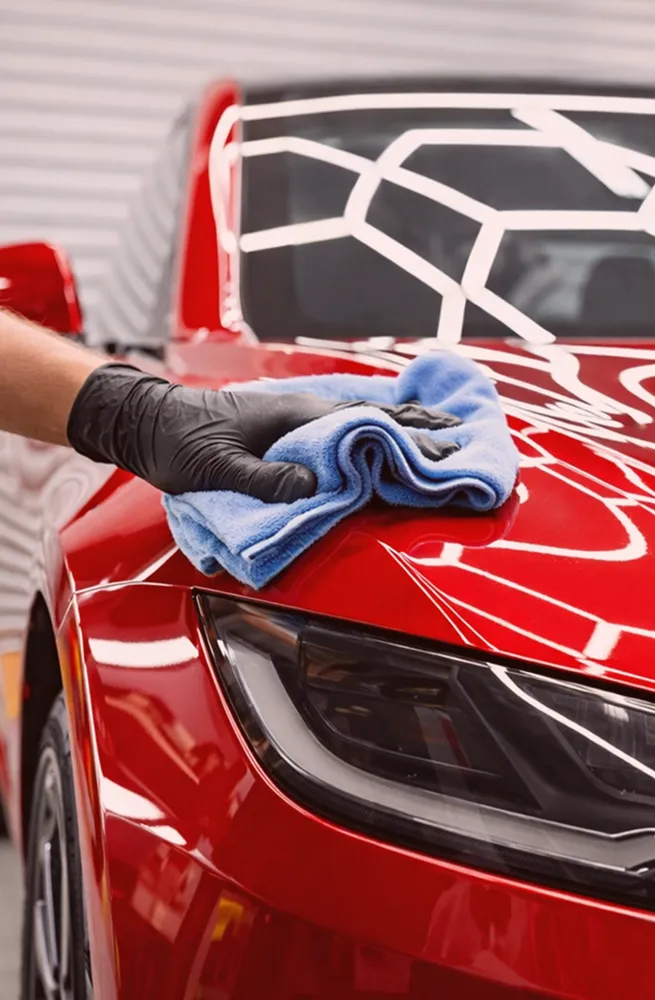
Why Paint Protection Film
The case for treating paint as an asset, not a finish.
Every vehicle carries a number behind it — purchase price, residual value, eventual resale. Paint is the largest visible variable in that equation. Rock chips from highway debris, road salt in winter, fuel splatter at the pump, micro-marring from automated washes — it all accumulates. Most of it is permanent.
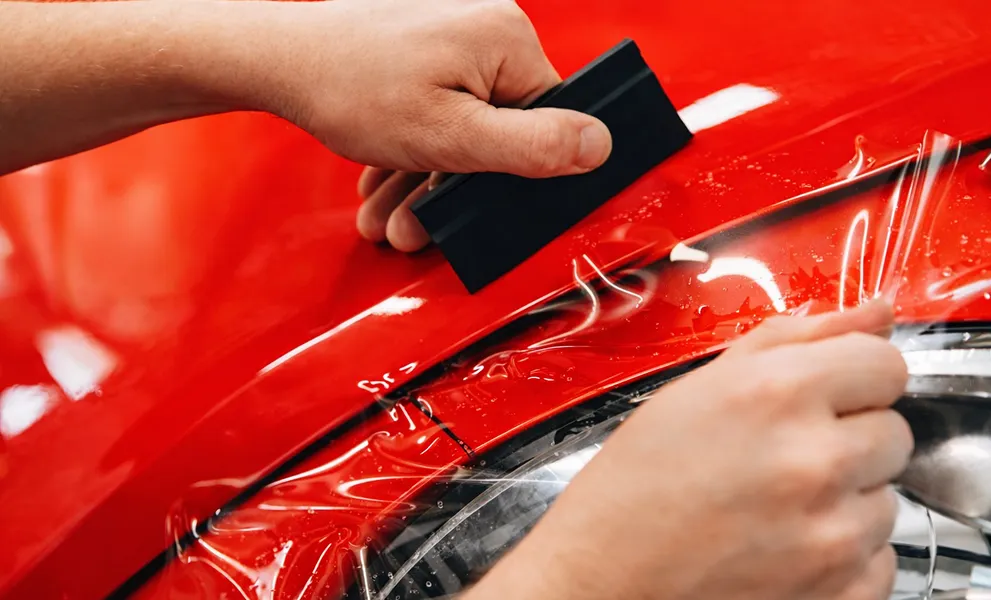
Paint Protection Film is a clear urethane layer applied over factory paint. It absorbs impacts that would otherwise reach the surface. Properly installed and maintained, modern PPF carries a 10-year warranty against yellowing, cracking, and delamination.
What it protects against
- Rock chips on leading edges — hood, fenders, mirrors, A-pillars, headlights.
- Stone bruising and abrasion damage from highway driving.
- Bug acid, sap, and tar that etch unprotected clear coat.
- Door edge chips from adjacent vehicles in parking.
What it does not do
- It does not prevent every form of damage. Direct impacts beyond the film's thickness will still reach paint.
- It does not replace ceramic coating's hydrophobic and gloss properties.
- It does not look perfect from inches away if installed without paint correction first.
Why it matters
Factory paint cannot be re-applied without compromising originality. Touch-up paint and respraying alter resale value. Front-end damage from road debris is the most common — and most expensive — paint failure point on any vehicle driven regularly.
PPF is the only protective layer that absorbs physical impact in place of the paint. Ceramic coating won't stop a rock chip. Wax won't either. PPF will.
At Detali, every PPF install starts with paint correction. We measure clear coat depth before application. Edges are wrapped, not cut on the panel. Seams are placed where they don't read. This is paint protection executed for the next decade — not the next car wash.