JOURNAL

Notes on preparation, materials, and execution.

May 8, 2026

Why Paint Protection Film

The case for treating paint as an asset, not a finish.
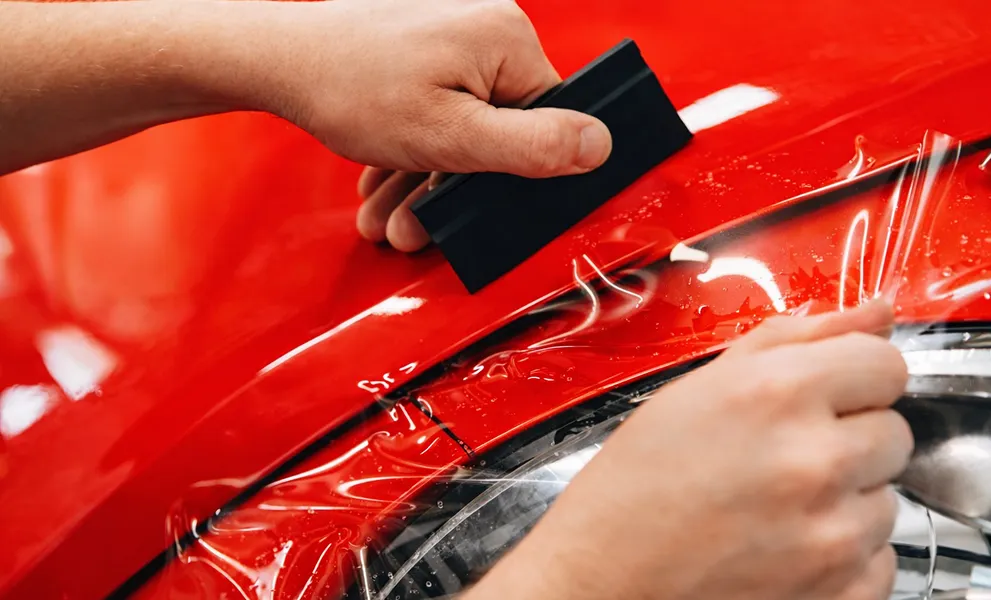
Hands installing transparent protective film on a red car's hood near the headlight.

Every vehicle carries a number behind it — purchase price, residual value, eventual resale. Paint is the largest visible variable in that equation. Rock chips from highway debris, road salt in winter, fuel splatter at the pump, micro-marring from automated washes — it all accumulates. Most of it is permanent.

Paint Protection Film is a clear urethane layer applied over factory paint. It absorbs impacts that would otherwise reach the surface. Properly installed and maintained, modern PPF carries a 10-year warranty against yellowing, cracking, and delamination.

What it protects against

  • Rock chips on leading edges — hood, fenders, mirrors, A-pillars, headlights.
  • Stone bruising and abrasion damage from highway driving.
  • Bug acid, sap, and tar that etch unprotected clear coat.
  • Door edge chips from adjacent vehicles in parking.

What it does not do

  • It does not prevent every form of damage. Direct impacts beyond the film's thickness will still reach paint.
  • It does not replace ceramic coating's hydrophobic and gloss properties.
  • It does not look perfect from inches away if installed without paint correction first.

Why it matters

Factory paint cannot be re-applied without compromising originality. Touch-up paint and respraying alter resale value. Front-end damage from road debris is the most common — and most expensive — paint failure point on any vehicle driven regularly.

PPF is the only protective layer that absorbs physical impact in place of the paint. Ceramic coating won't stop a rock chip. Wax won't either. PPF will.

At Detali, every PPF install starts with paint correction. We measure clear coat depth before application. Edges are wrapped, not cut on the panel. Seams are placed where they don't read. This is paint protection executed for the next decade — not the next car wash.
April 24, 2026

PPF or Ceramic Coating?

Two different problems. Two different answers. Sometimes both.

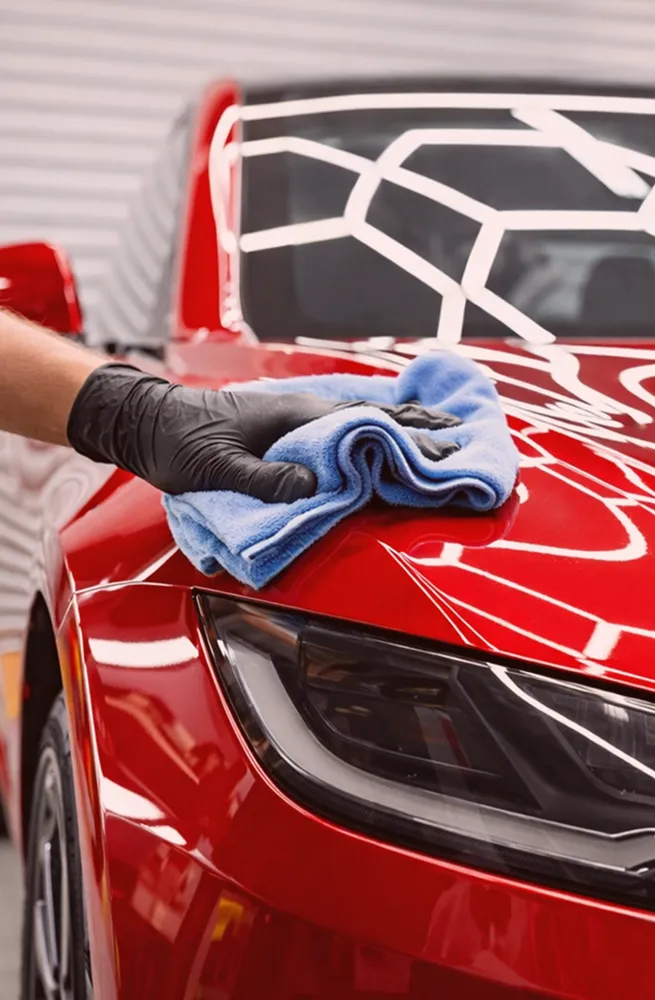
Person wearing black gloves polishing the hood of a shiny red car with a blue microfiber cloth.

The question gets asked weekly. The honest answer: they solve different problems.

Paint Protection Film

  • Physical barrier. Urethane film, 8 mils thick.
  • Stops rock chips, light scuffs, and abrasion damage.
  • Self-healing under heat — minor swirls disappear with sun exposure.
  • Lifespan: 10 years with proper care.

Ceramic Coating

  • Chemical layer. Silicon dioxide bonded to the clear coat.
  • Repels water, contamination, and light chemical fallout.
  • Enhances gloss and simplifies washing.
  • Does not stop physical impact.
  • Lifespan: 3 to 7 years depending on formulation.

How to choose

  • Daily driven, highway miles → PPF on impact zones (hood, fenders, mirrors, A-pillars) is the higher priority.
  • Garaged, weekend use, paint already corrected → ceramic alone may be sufficient.
  • Wants both → PPF first, ceramic on top. The coating protects the film from staining and makes both easier to clean.

A note on cost

Ceramic feels cheaper at the quote. Over a decade, it isn't — reapplication every few years adds up. PPF is an upfront investment that doesn't repeat at the same interval.

Detali installs both — but only after assessment. Some vehicles don't need full PPF. Some don't need ceramic. We tell you which, before we quote.

April 17, 2026

Colored PPF vs Vinyl

Same look. Different layer. Wildly different outcome.

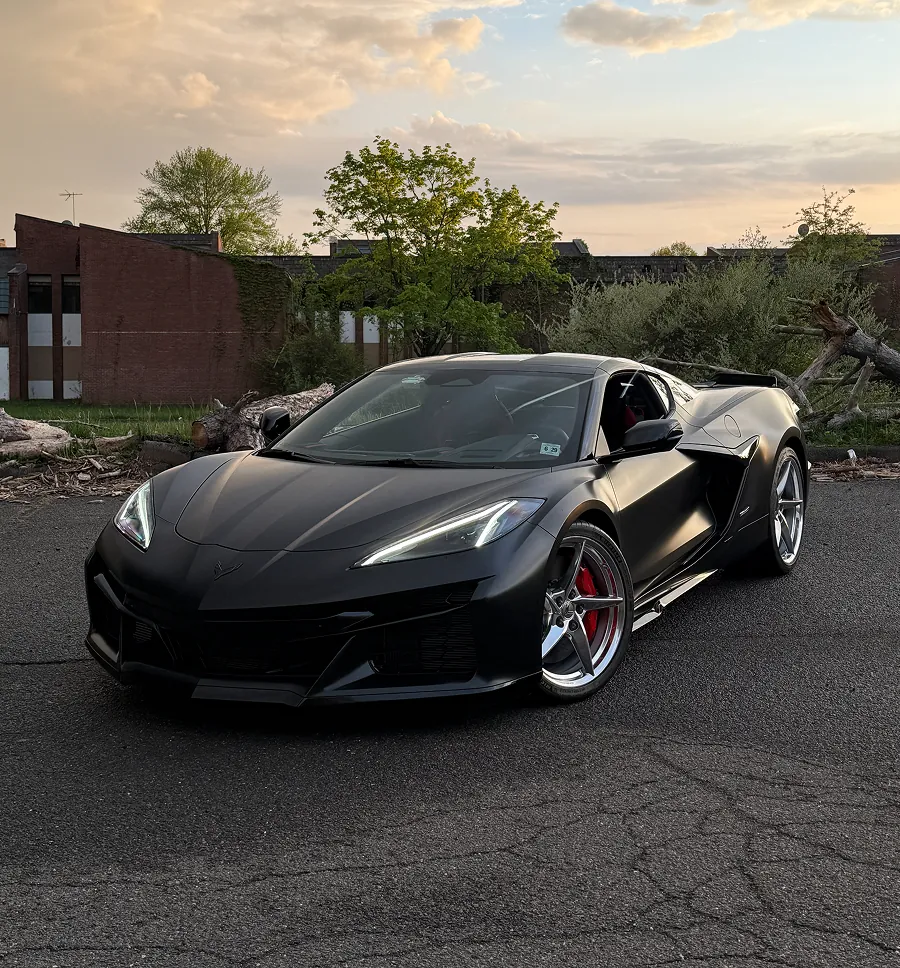
Front side view of a matte black Mercedes-Benz car parked indoors with modern lighting on the walls.

Vinyl wrap was the only way to change a vehicle's color without paint for two decades. Now there's a second option: colored Paint Protection Film. The visual result can look identical. The construction is not.

Vinyl Wrap

  • Cast PVC film, 3 to 4 mils thick.
  • No self-healing.
  • Designed for color change — protection is incidental.
  • Lifespan: 5 to 7 years before edge lift or color fade.
  • Returns to original paint when removed (assuming clean removal).

Colored PPF

  • Urethane film, 8 mils thick, with pigment cast into the material.
  • Self-healing top layer.
  • Protection-first construction with color built in.
  • Lifespan: 10 years.
  • Same removal profile as clear PPF.

Where they overlap

Both are removable. Both preserve the factory paint underneath.

Where they diverge

Colored PPF takes a rock chip and recovers. Vinyl will dent, scuff, and stay scuffed. If a build needs to look distinct and survive daily driving, colored PPF earns its premium.

Where vinyl still wins: matte chrome, satin metallic, color-shift, custom prints, full advertising livery. The colored PPF palette is narrower — matte and gloss blacks, frozen colors, a few accent shades. For full creative range, vinyl is still the answer.

The decision

  • Daily driver, color change, wants protection → colored PPF.
  • Show build, exotic finish, garaged → vinyl.
  • Single matte conversion on a kept vehicle → colored PPF.
  • Promotional or temporary livery → vinyl.

We install both. The conversation upfront is the same: what's the vehicle, how is it used, what comes off when it's traded.